Most mining equipment does not fail all at once. A bucket loses its wear surface long before the structure behind it is finished, a moldboard cracks at a rail, and a rear axle housing splits at the one spot that carries the most stress. The question every maintenance team faces is whether to repair, rebuild or replace. This post shows how to decide, and what Raptor repairs at Jurassic Heavy Welding in Edmonton and at our CISC (Continuous Improvement Service Center) locations.
Repair, rebuild or replace: how to decide
The deciding factor is almost always what failed. If the structure is sound and the wear surface is gone, a repair or overlay brings the part back. If the structure has cracked at a known stress point, the fix is repair plus reinforcement at that spot. If the structure itself is fatigued or deformed past saving, replacement is the honest answer, and we will tell you so.
| What you are seeing | Usually | What it involves |
|---|---|---|
| Wear surface gone, structure sound | Repair or overlay | Replace the wear package or apply robotic overlay to the worn area |
| Cracks at a known stress point | Repair and reinforce | Crack repair, then reinforcement at that spot, such as a stiffener package |
| Rails or edges worn through | Rebuild | Rail replacement and a new wear package |
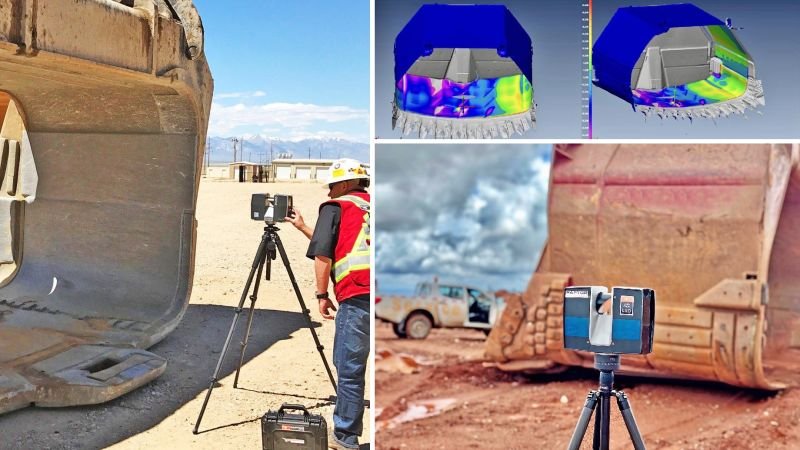
| Wear across several areas of a bucket | Rebuild | Laser scan where possible, restore the profile, then protect the wear zones again |
| Structure fatigued or deformed past repair | Replace | A new part or a new bucket |
Every machine is different, so treat the table as a starting point and not a verdict. Photos of the part and a note on where it wears are usually enough for us to give you a straight answer.
What we repair
Raptor repairs all makes of mining equipment and attachments. These are the jobs we see most.
| Component | Typical work |
|---|---|
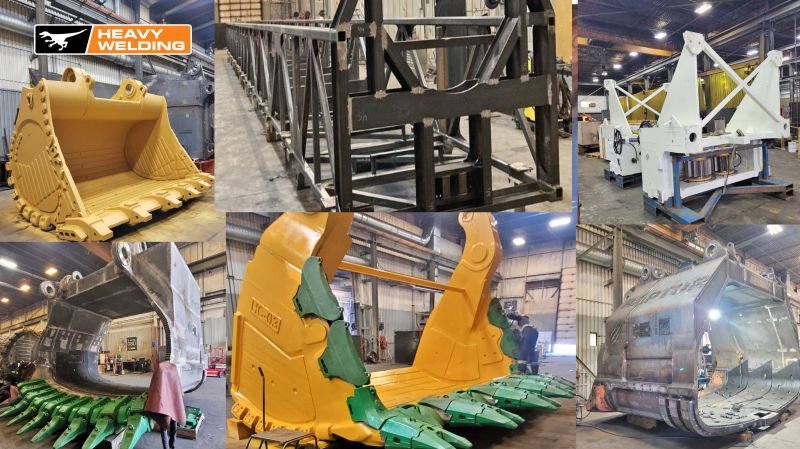
| Buckets and dippers | Inspection, repair, rebuild, and new buckets and dippers |
| Shovel clams and doors | Rebuilds with laser scanning, including Hitachi EX8000 series HMS clams and doors |
| Moldboards | Rail replacement, crack repair and wear package replacement, restored to OEM standards |
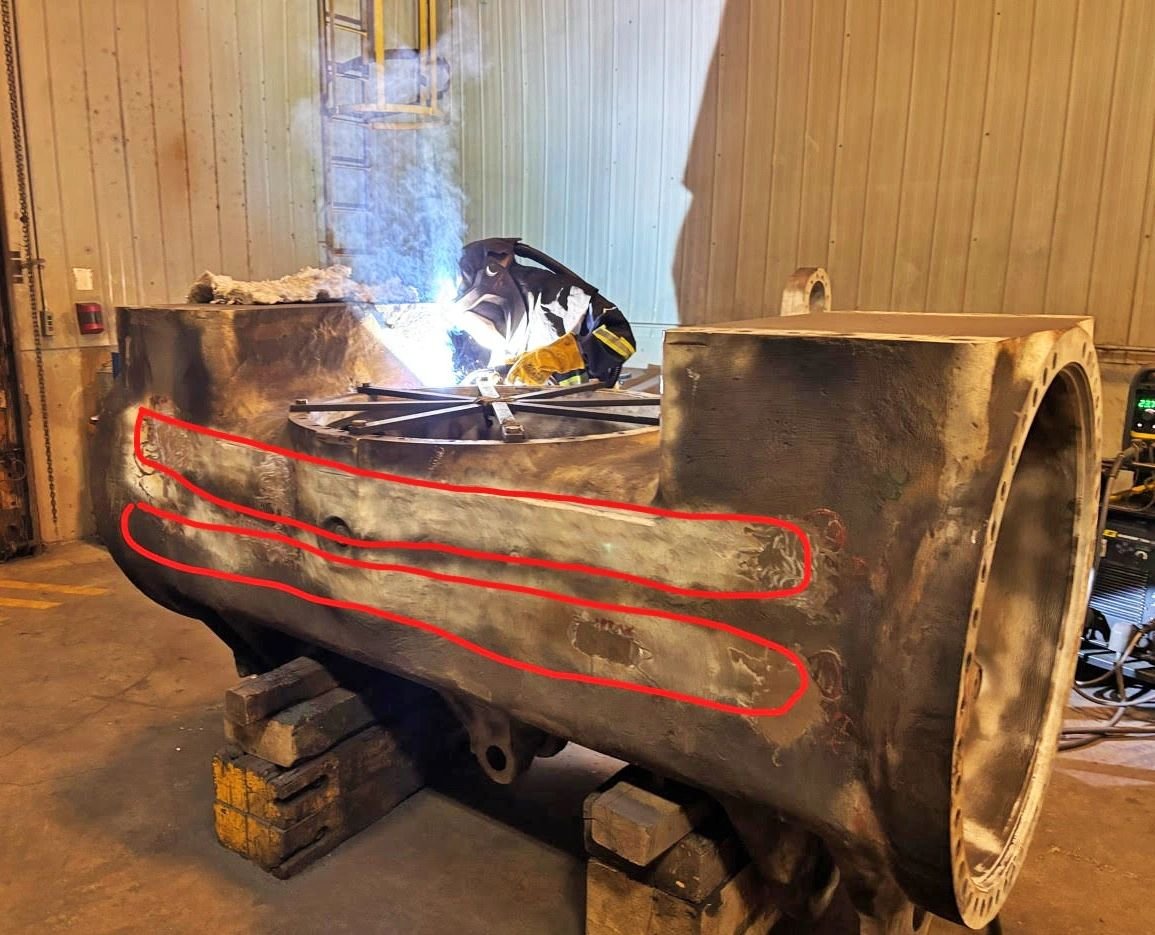
| Rear axle housings | Stiffener upgrade at the highest stress area to reduce cracking and extend life |
| Truck core components | Hydraulic tank, radiator, fuel tank and rear axle housing repaired to OEM specifications, plus custom repairs |
Robotic overlay: using the life a part still has
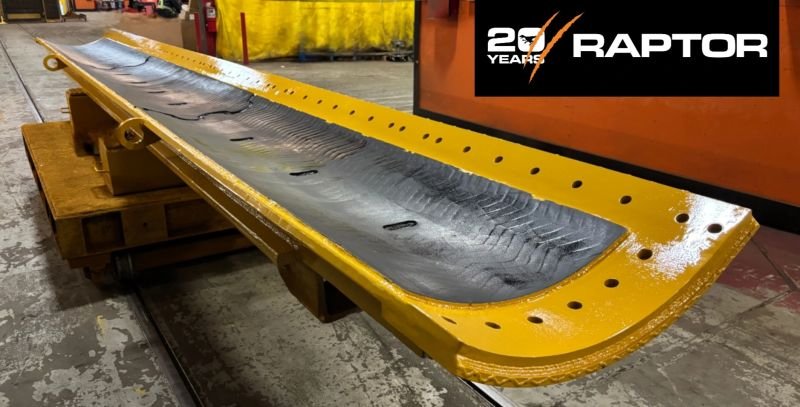
Many wear parts are changed out while most of the piece is still good. Bolt-on half arrows and reversible segments, for example, often come off with about 80% of the part in great shape. Overlay puts that remaining life back to work. Raptor applies ARM ULTRA™ and PTA HARDERCOAT™ robotically, and each CISC offers high volume overlay and low volume custom overlay depending on the job. We keep every pattern on file, so when conditions change we adapt the pattern instead of starting over. To see where overlay fits in the wider process, visit our technologies page.
Laser scanning, where it helps
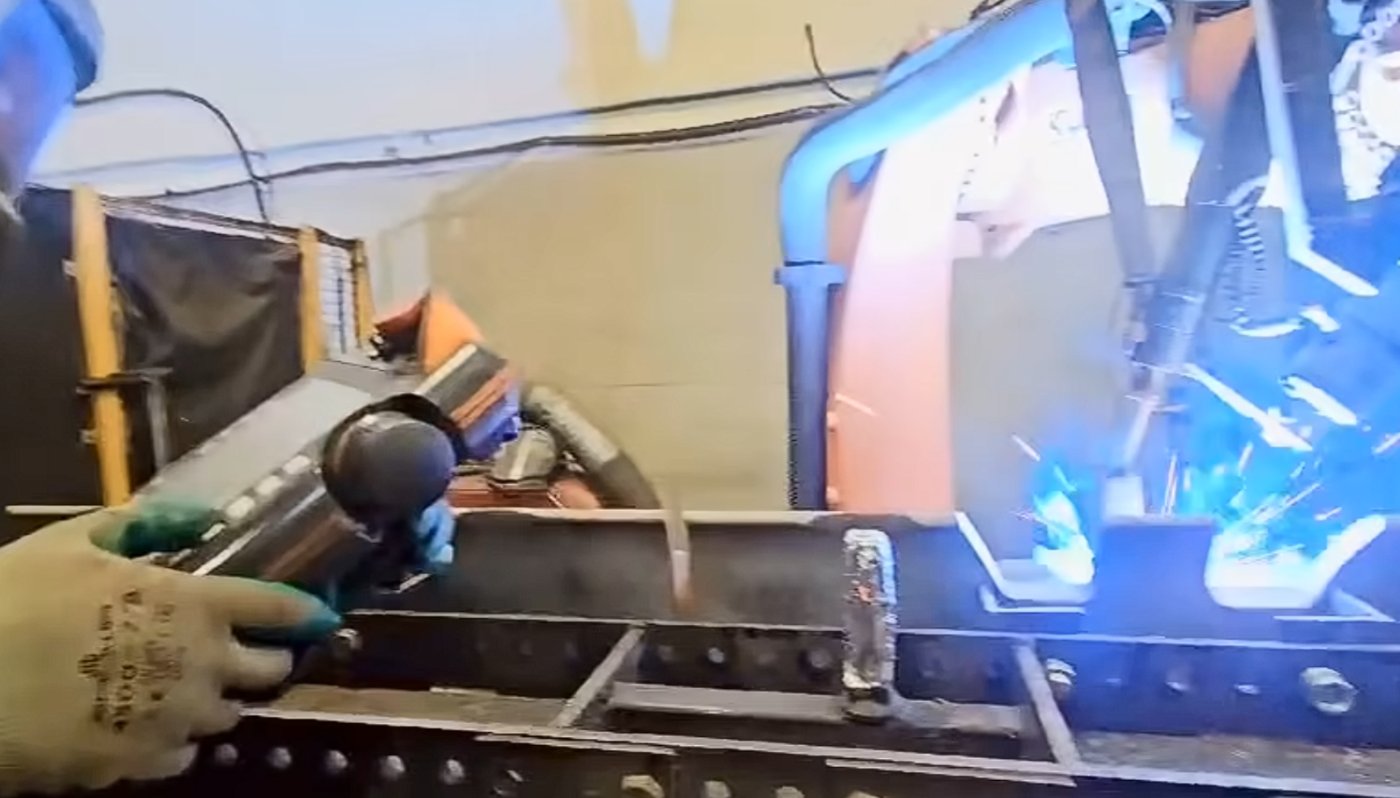
When a bucket or component has worn unevenly, a laser scan lets us restore the original profile instead of guessing it. We use it where it helps. Not every job can be scanned, so we confirm that when we look at the part.
How a repair job goes
| Step | What happens |
|---|---|
| 1. Tell us what you have | Send the machine, the part and where it wears or cracks. Photos help. |
| 2. We look at it | We inspect the part and laser scan it where possible. |
| 3. You get a straight answer | We tell you whether it is a repair, a rebuild or a replacement, and quote it. |
| 4. Back in service | The work is done and the part goes back to the machine. |
Where the work happens
Heavy welding, mining equipment rebuilds with laser scanning, robotic manufacturing and field welding run out of Jurassic Heavy Welding in Edmonton, Alberta, a Raptor Mining company. Repair and overlay work also happens at Raptor CISC (Continuous Improvement Service Center) locations. If a part cannot come to us, ask about field welding.
Common questions
Keep reading
A sound repair has the machine back at work while the new part is still on order, and that is how we GSD® when downtime is the real cost.
PEOPLE. SAFETY. QUALITY. VELOCITY.