A chute liner does not fail on a schedule. It thins out a little every shift, and then one day the plate is gone and the chute wall is next. Here is how to tell a fixed plant chute is due for a reline, and what to send your supplier so the replacement is ready when your shutdown starts.
How do you know a chute liner needs replacing?
| What you see | What it tells you |
|---|---|
| A bright, polished patch at the impact point | Material is landing hard in one spot, and the liner there is thinning fastest. |
| Backing steel showing through | The wear layer is gone. Reline before the chute wall takes the damage. |
| Grooves running along the flow | Sliding abrasion has cut channels, and a channel gets deeper every shift. |
| Cracked plates or lifted corners | Impact is working the plate loose, and a loose plate wears faster and lets material in behind it. |
| Material hanging up or spilling at the transfer point | A worn liner changes how the flow runs, so the problem shows up downstream. |
| The same patch repaired shutdown after shutdown | The liner is past patching. |
Where does a fixed plant chute wear first?
The impact zone, where the stream lands, wears first and fastest. After that comes the floor and walls the material slides along, and then the corners and transitions where the flow changes direction. That pattern holds at crusher discharge chutes, transfer points, feeders and hoppers, which is why a good reline often starts with the high wear area and works outward. If you are lining a dump truck body instead, start with our truck body and chute liner guide.
Which liner suits a chute?
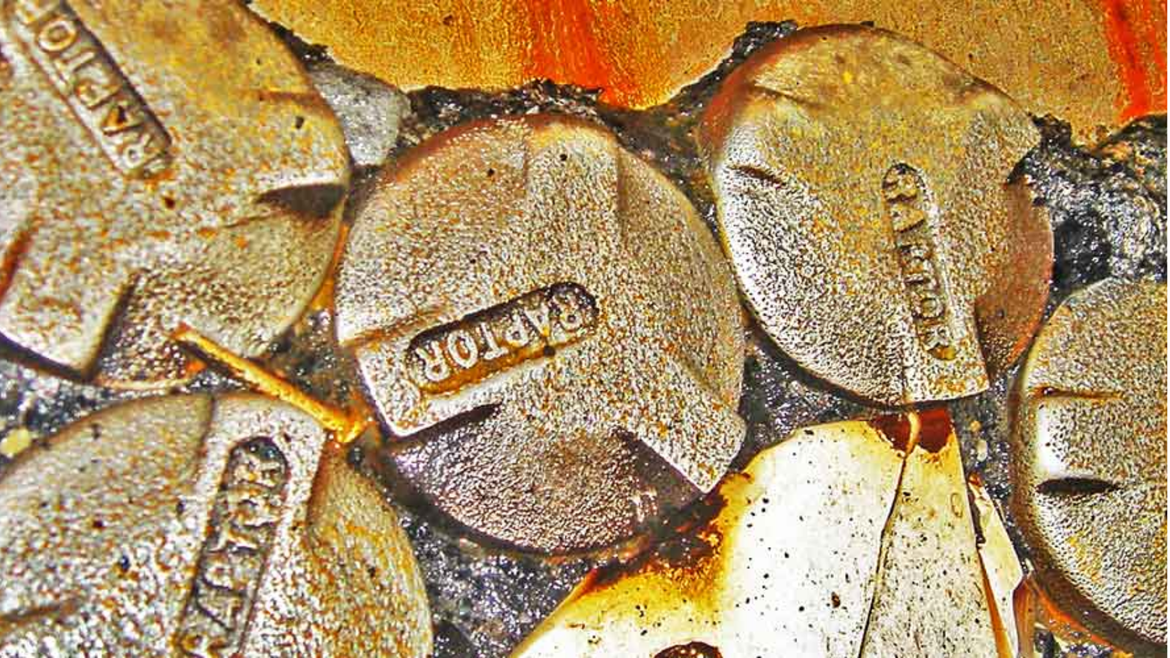
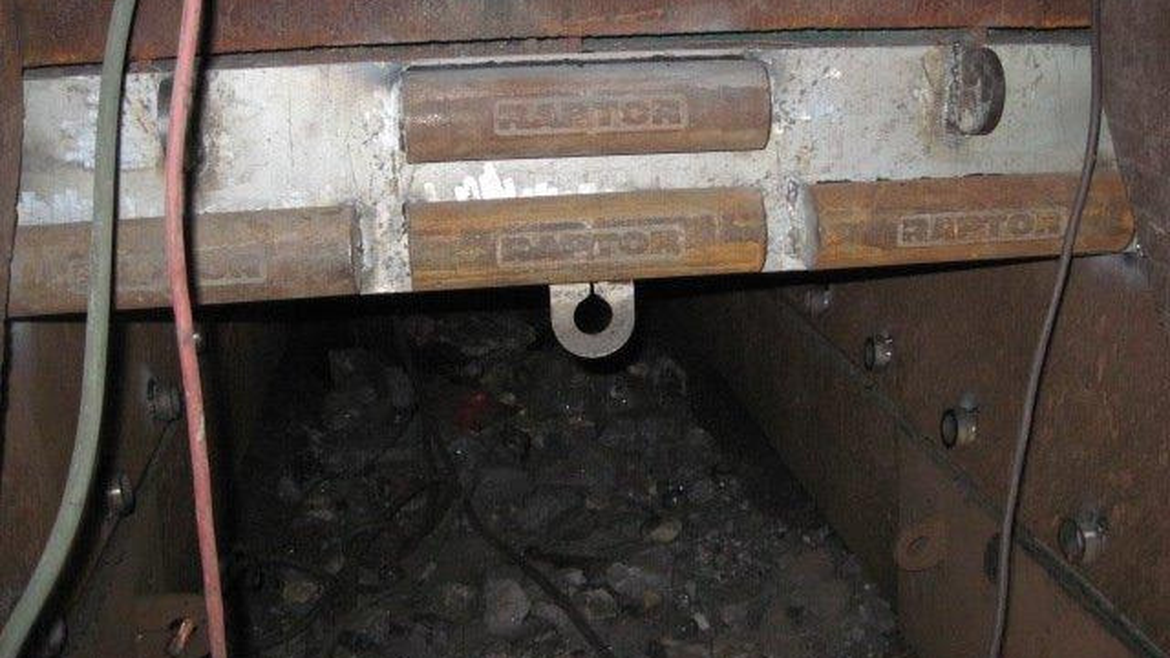
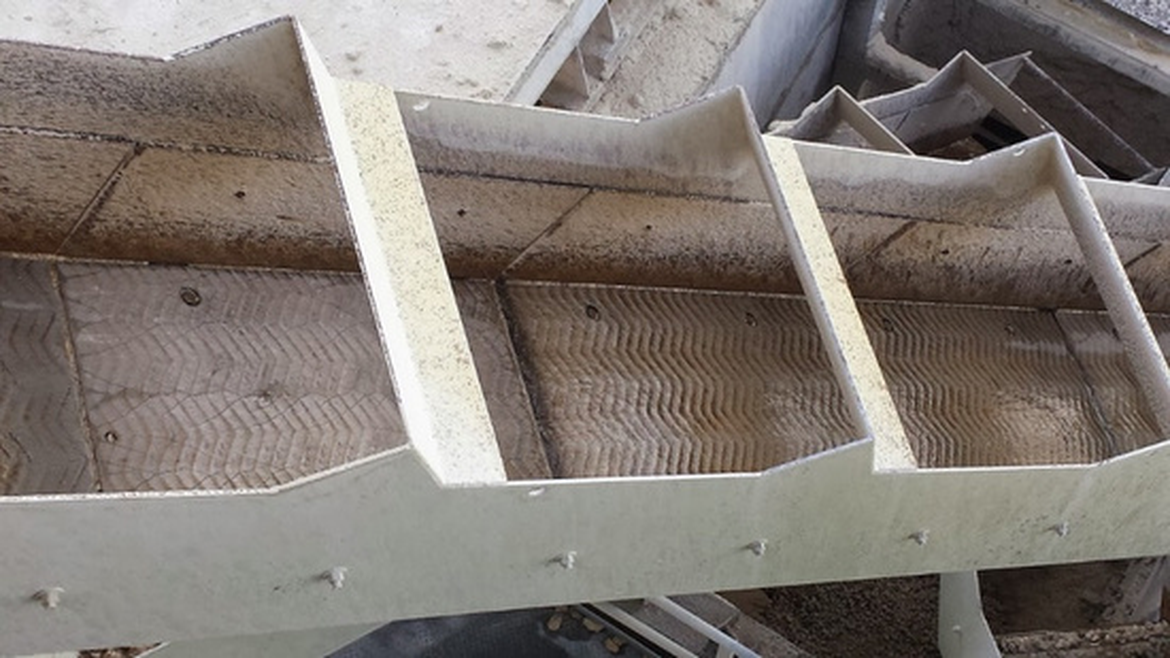
It depends on how the material hits. Chromium carbide overlay (CCO) RaptorPlate® is made for sliding abrasion, where fines, sand and crushed rock grind down the floor and walls. AR plate is made for heavy impact, where large lumps drop onto the liner. Many chutes see both, so the answer is often a mix, with the tougher plate where the stream lands and CCO along the slide. Cast wear blocks also suit the hardest hit areas. For the full explanation, read AR plate vs chromium carbide overlay.
What should you send your supplier?
| Send this | Why it matters |
|---|---|
| Which chute or hopper it is | A crusher discharge, a transfer point, a feeder and a hopper each wear differently, so the first question is where the liner sits. |
| What runs through it | Rock, ore, coal, sand or recycled concrete. Tell us if it is fines or large lumps. |
| How the material hits | Dropping from above is impact. Sliding down the floor is abrasion. Most chutes are both. |
| Photos of the worn liner | One wide shot of the whole chute and a close up of the worst spot show us the damage and how fast it is happening. |
| What is in there now | The current liner and how long it lasted tell us whether to change the plate. |
| Rough size of the area | The area to cover tells us whether you need full sheets, strips or wear patches. |
| Your shutdown window | The date you can get into the chute shapes how we plan the order. |
| Where it ships | The site and city tell us what is stocked close to you. |
The longer checklist that applies to any wear plate job is in what a wear plate supplier needs to quote your job. Planning the shutdown itself? Start with how to plan wear and downtime.
Can the liner be cut to fit your chute?
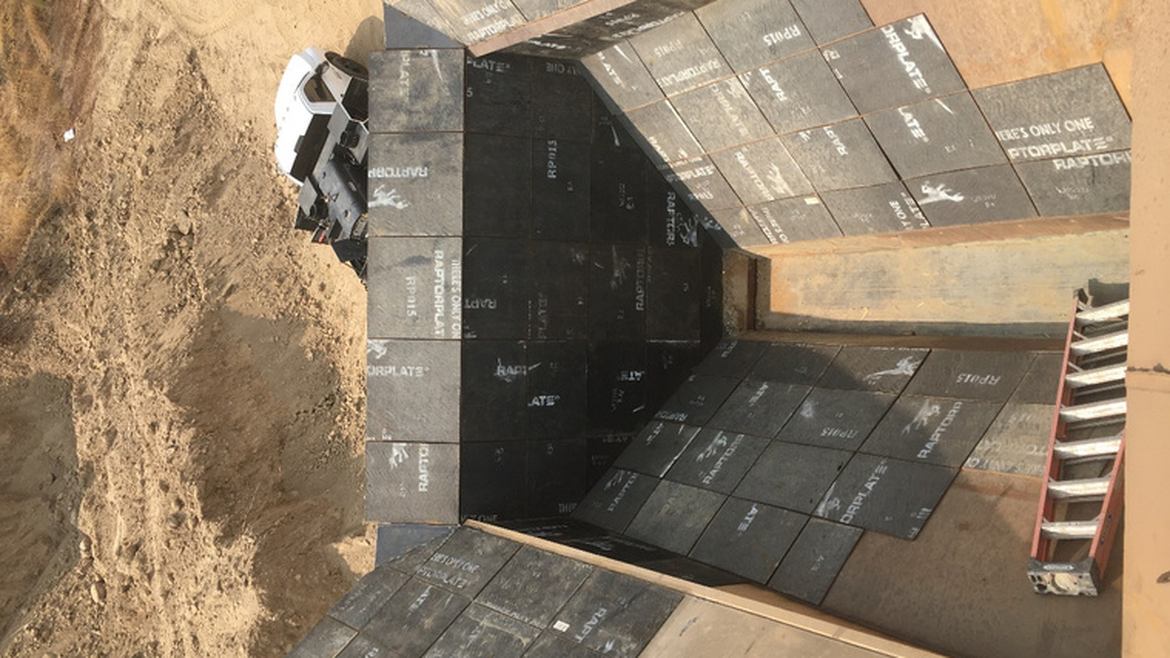
Yes. RaptorPlate® is stocked in Canada and sold whole or cut to order, so you are not waiting on a mill. Where the job allows, Raptor laser scans the chute and cuts a liner kit to that scan, which cuts down on fitting on site. Not every job can be scanned, so we work out the best way to get the shape right once we see your photos. RaptorPlate® is welded in place, and our installation procedure covers the method step by step.
Chute liner replacement, answered
Relining on your schedule beats relining on the chute's schedule. Send what you have and we will help keep the shutdown short enough to get the plant back to GSD®.
PEOPLE. SAFETY. QUALITY. VELOCITY.