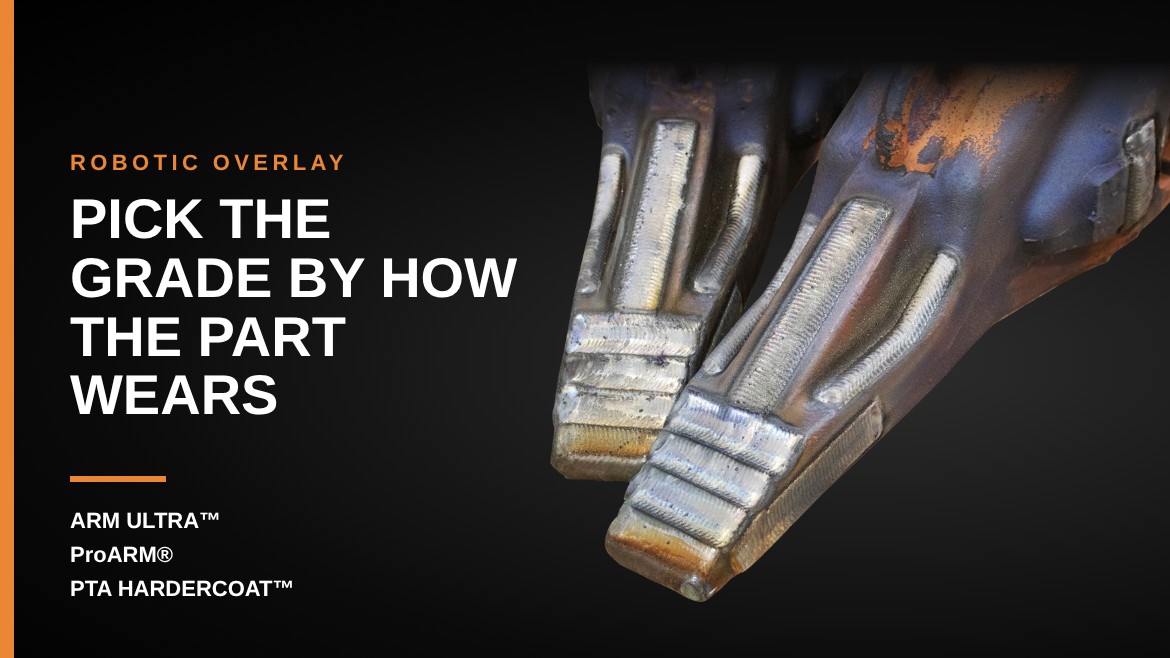
Two wear parts can sit side by side on the same machine and still wear in completely different ways. One gets ground down by constant abrasion, and the other sees major impact until it chips. Hardfacing, also called overlay, adds a wear-resistant layer to the surface of a part so it lasts longer in service, but the grade that suits one part will not suit the other, and the wrong grade is how a part ends up back on the bench early. Raptor applies ARM ULTRA™, ProARM® and PTA HARDERCOAT™ robotic hardfacing at every Raptor CISC (Continuous Improvement Service Center), so the grade can follow the way your part actually wears.
Pick the hardfacing grade by how the part wears
Two things decide the grade: how fast the part wears and how hard it gets hit. Each card below rates the grade on both, and the line at the bottom says where it fits best.


Which mining wear parts can be hardfaced
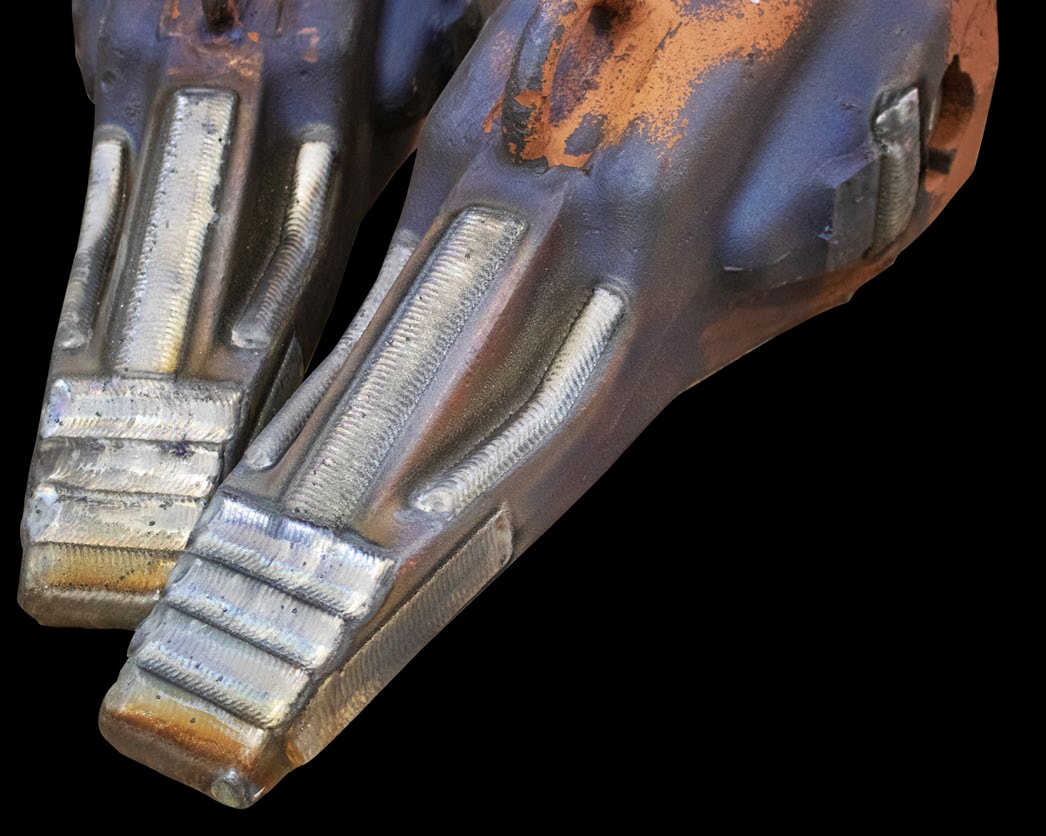
Overlay maximizes wear life on tips and adapters, cutting edges, bolt-on segments and plenty of other wear components you may have. PTA stands for Plasma Transferred Arc, a welding process that uses a plasma arc to deposit a wear-resistant layer, and it is the grade we reach for when abrasion is severe and impact is low. If you are not sure which grade your part needs, send us the part and tell us how it wears. We take it from there without cutting a corner on safety.
Hardfacing a worn part instead of replacing it
Many wear parts are changed out while most of the piece is still good. Bolt-on half arrows and reversible segments, for example, often come off with about 80% of the part in great shape. Overlay puts that remaining life back to work. Each CISC offers high volume overlay and low volume custom overlay depending on the job, and because we keep every pattern on file, we can adapt the pattern when conditions change instead of starting over. For more on the process, read about our robotic overlay services or visit our technologies page.
How a hardfacing job goes
| Step | What happens |
|---|---|
| 1. Pick the grade | Match the grade to how the part wears. If you are unsure, we will spec it. |
| 2. Send us the part | Send the part and tell us how it wears. Photos help. |
| 3. We apply the hardfacing | The overlay is applied robotically at a Raptor CISC, to a pattern we keep on file. |
| 4. Back in service | The part goes back on the machine with its wear life restored. |
Common questions
Keep reading
The only gear we have is the one that lets us GSD® right, and for a worn tip that means the right grade on the right part the first time.
PEOPLE. SAFETY. QUALITY. VELOCITY.