Chromium carbide overlay (CCO) plate is not hard to find in Canada. A supplier who has it on the shelf, can cut it and fit it to your machine, and will tell you when it is the wrong plate is harder to find. Here is what to ask before you place the order, whoever you buy from.
What is chromium carbide overlay plate?
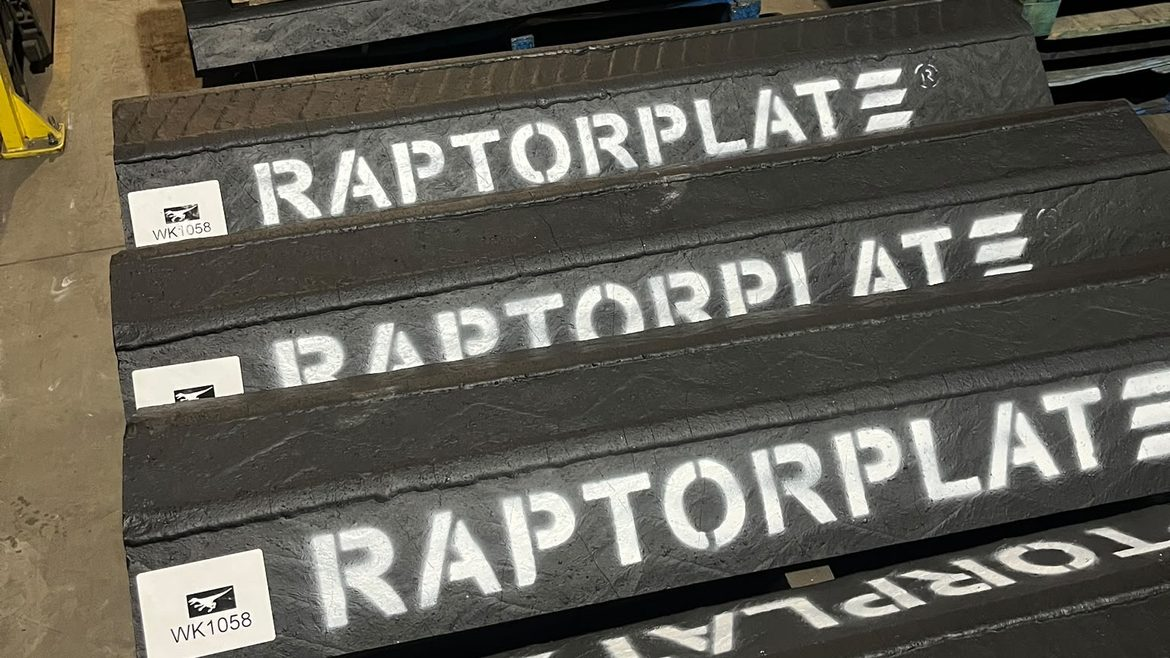
CCO, also called chrome carbide overlay, is a mild steel base plate with a hard chromium carbide alloy fused to the working surface. The overlay resists sliding abrasion, which makes it the right specification for chutes, hoppers, liners, buckets and transfer points where material is always moving across the plate. See how RaptorPlate® is made and where it goes
What should you ask a CCO plate supplier?
| Ask | Why it matters |
|---|---|
| Is it stocked in Canada? | Plate on the shelf is on site this week. Plate on order is a shutdown risk. |
| Can it be cut to size? | Full sheets, strips and wear patches cover most jobs, so you buy what the job needs. |
| Can they fit it to your machine? | A liner kit made from a scan avoids gaps and extra fabrication on site. |
| What are the base and overlay thicknesses? | Two plates that look alike on a quote can wear very differently. |
| Will they tell you when CCO is the wrong plate? | Heavy impact calls for AR plate, and a good supplier says so. |
| Can they show it working? | Real applications with real numbers beat a brochure claim. |
Is it stocked in Canada, and in what form?
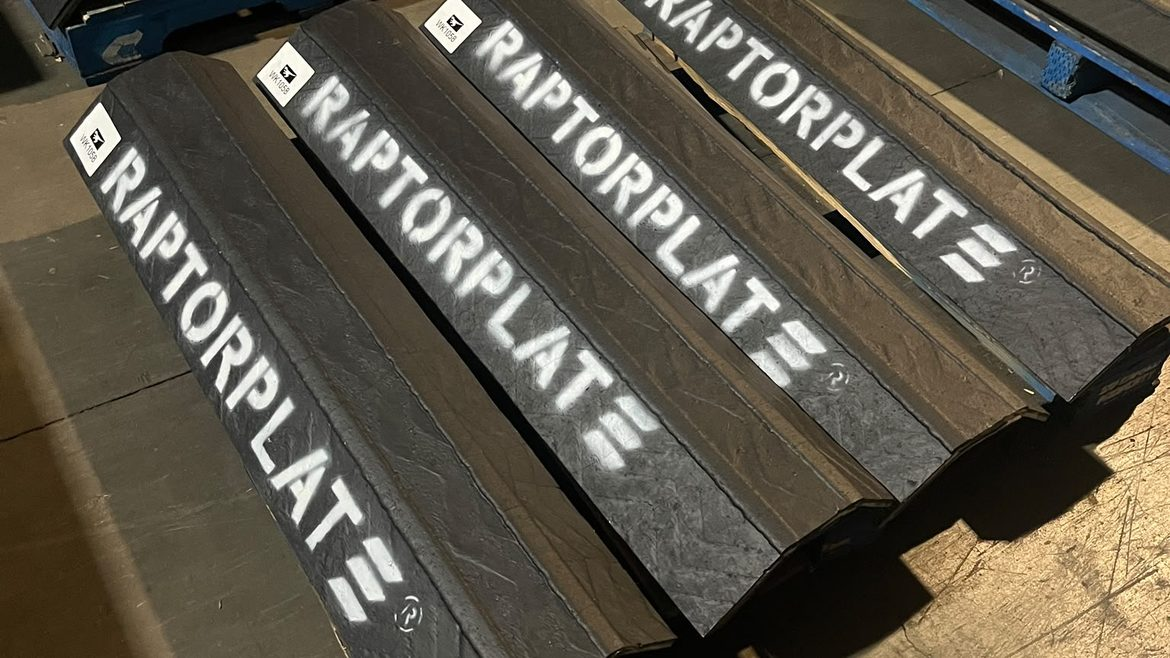
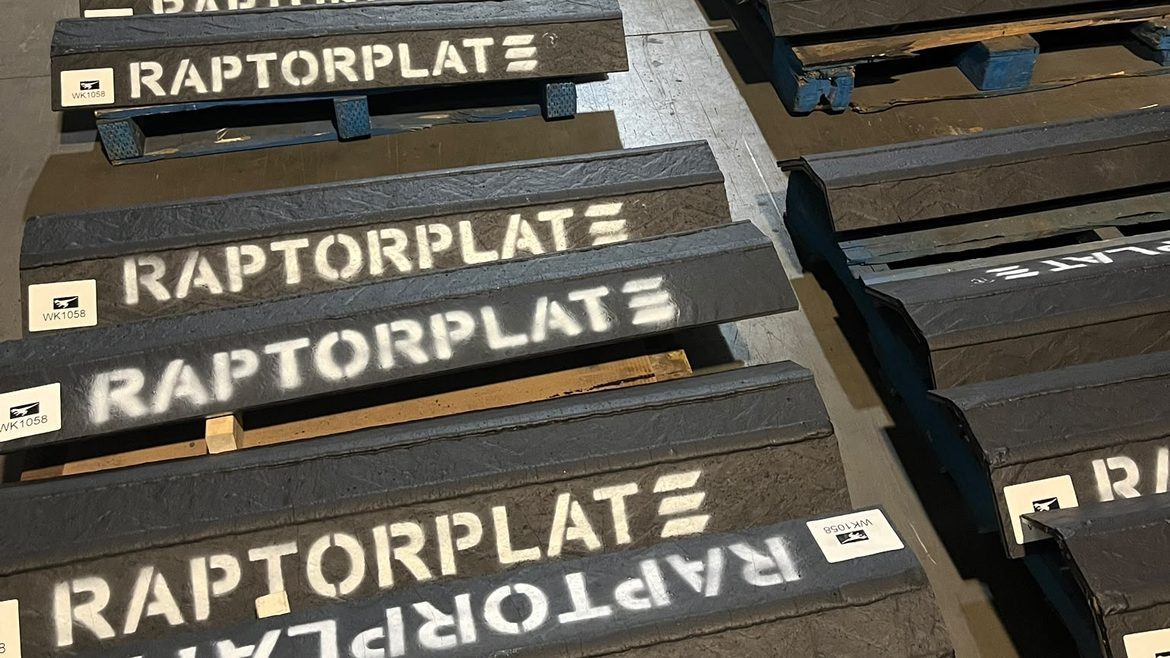
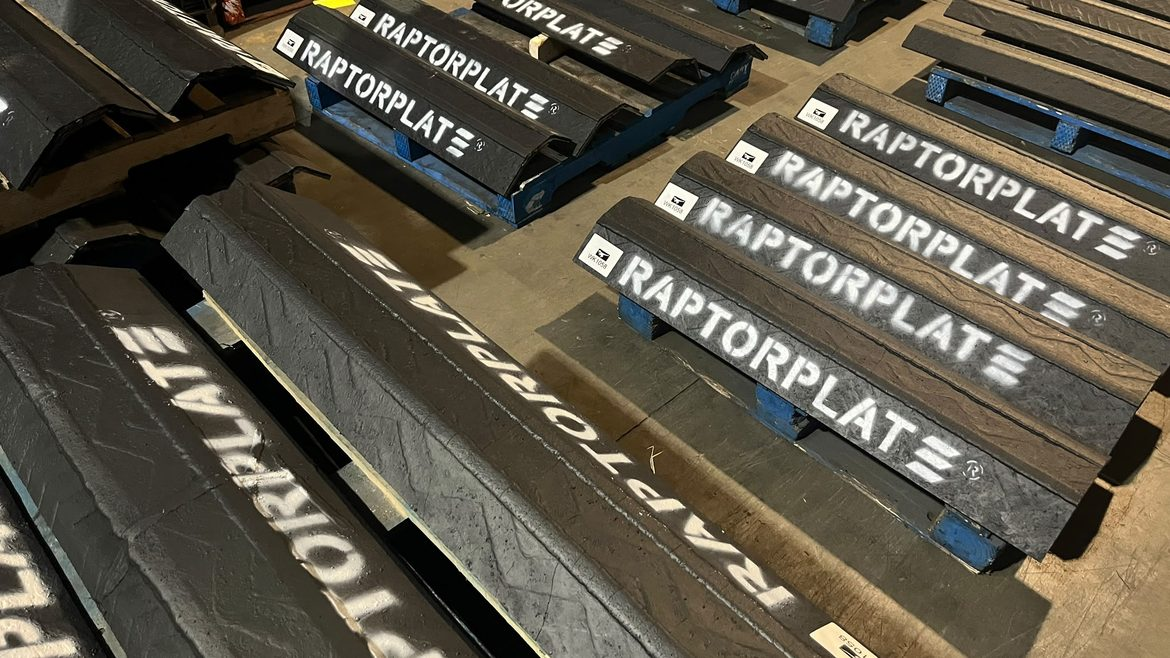
Lead time is the first thing that separates suppliers, so ask where the plate physically sits and not where it can be ordered from. RaptorPlate® is stocked in Canada and sold whole or cut to order, as full sheets, strips and wear patches, with custom sizes on request.
Can they fit it to your equipment?
Plates that do not match your equipment leave gaps, wear unevenly and need extra fabrication on site. Raptor laser scans equipment at our CISC (Continuous Improvement Service Center) locations or on your site, and our engineers produce the liner kit from that scan before it leaves the shop. Not every job can be scanned, so tell us what you are working with and we will work out the best way to size it. Learn more about laser scanning
What base and overlay thickness are you actually getting?
Overlay plate is specified as base thickness over overlay thickness. Ask for both numbers in writing and check them against what your application calls for. A clear answer here tells you a lot about the supplier.
Is CCO the right plate for the wear?
CCO is made for abrasion, not heavy impact. For heavy impact zones we recommend HarderPlate® AR plate, and for machines that see both, such as a dozer blade, we supply a mixed kit with RaptorPlate® where material slides and HarderPlate® where it takes the hit. If a supplier recommends the same plate for everything, keep asking. AR plate vs chromium carbide overlay
Can they show it working?
Ask for real applications with real numbers. In a concrete recycling application, a RaptorPlate® blade liner ran 103 months with zero failures. In the Yukon, one liner package covered four applications over five years. Read the concrete recycling case study Read the Yukon case study
Will they help you install it?
CCO is welded on, and the method depends on the application, whether that is a full perimeter weld or plug welds. Plates can also be supplied with studs welded to the mild steel side. Follow the step by step welding procedure
What should you send when you ask for a quote?
The application, the material, the machine or structure and rough dimensions get you a faster and more accurate answer. If you are not sure, send what you have and we will point you to the right plate or liner kit. A supplier who answers quickly keeps your crew on the GSD® side of the shutdown instead of waiting on a plate.
CCO plate in Canada, answered
PEOPLE. SAFETY. QUALITY. VELOCITY.